

Case · Dubai
The delivery text that wasn't.
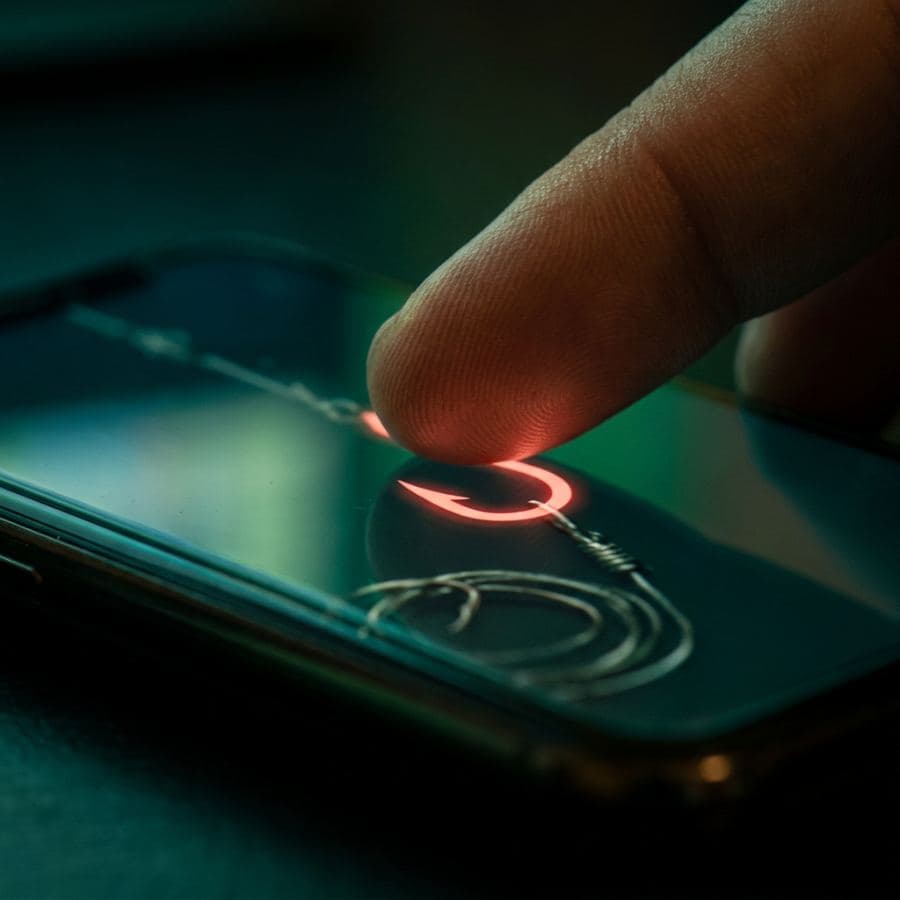
A payment link posing as a well-known courier reached a Dubai resident. The guard flagged the impersonation before card details went in. The page was a harvesting site.
PhishingBrand impersonation
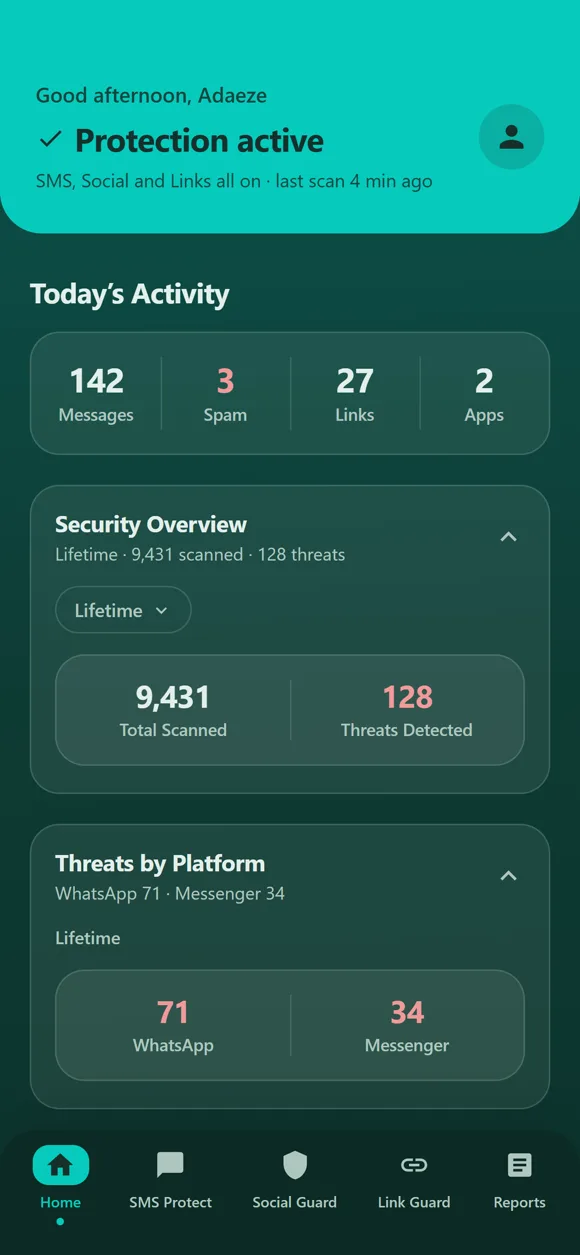
Your texts, your WhatsApp, the links inside them: read, judged and held before you even look.
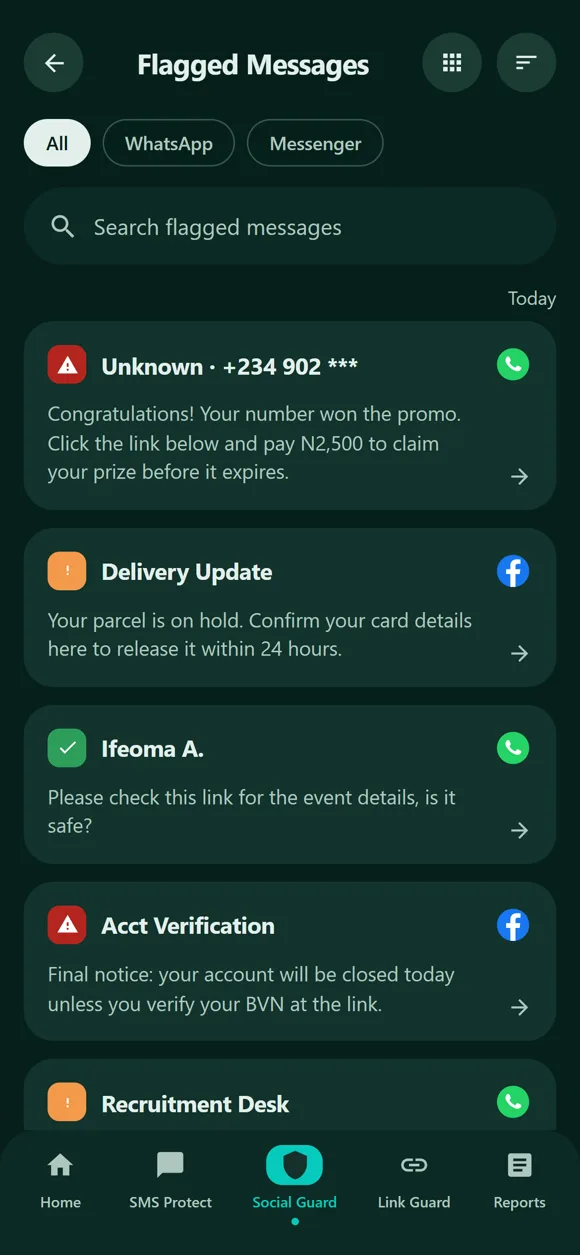
A fake courier. A blocked BVN. A “Hi Mum” from a number you've never seen.
Just your thumb, a tired moment, and a link that looks close enough.
Between the tap and the trap. Every message, every chat, every link.
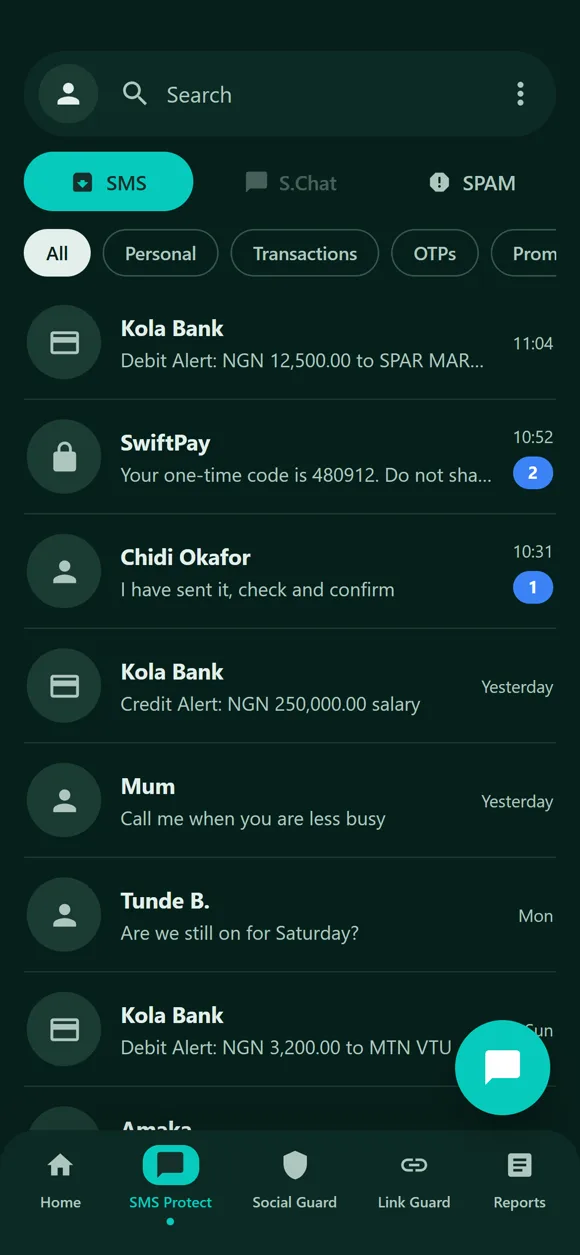
Every text judged on arrival. The scam raises an alarm, the bank alert stays a bank alert, your OTP shows up ready to copy.
It reads WhatsApp so you don't get read. Every flag comes with the reason, not just a red dot.
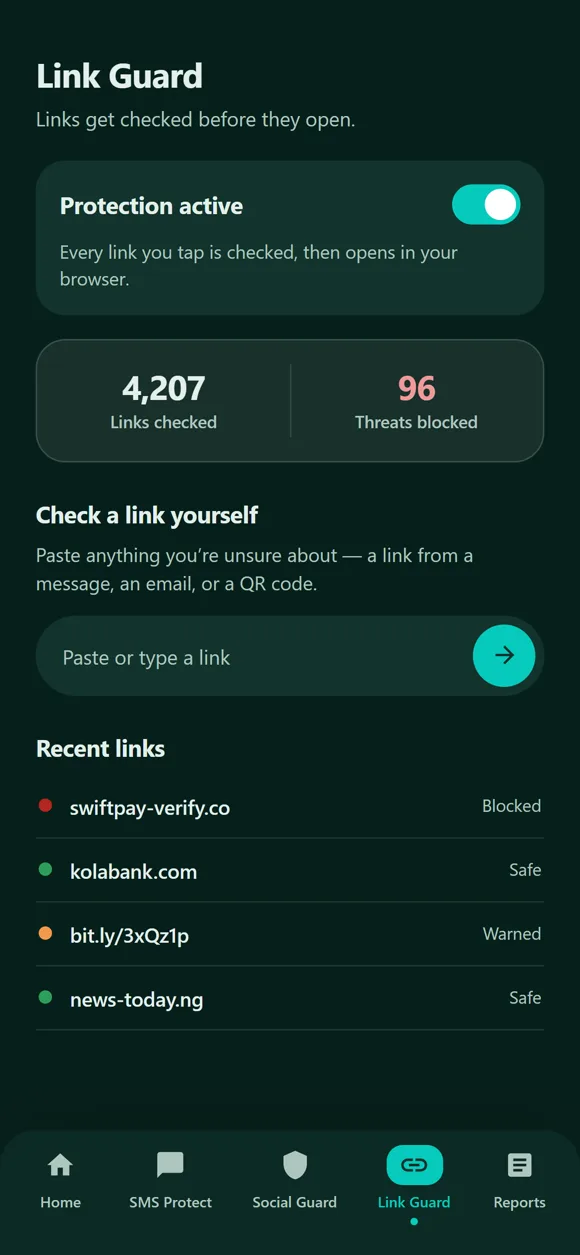
Links wait at the door. Tap one and it's held until the engine answers. A scam page never gets to load.
Four guards and a messenger you'd actually switch to. And it guards even if you keep your current one.
Tap a link. It waits. You don't.
Most tools check links against yesterday's blocklists. Our engine watches live phishing traffic, so the scam domain registered this morning is already on file by the time it reaches you.
The Web Extension runs on the same engine, pointed at the place where phishing actually lands: your inbox.
The app, the extension and the API all ask one engine. Its diet: live phishing traffic, all day, in the languages scams are actually written in.
New scam domains show up in texts before they show up on blocklists. We read the texts.
Hybrid post-quantum encryption, the same NIST-standardized algorithms as Signal and iMessage.
Message text is never stored on our servers. Links are logged by host only, never the full URL.
A payment link posing as a well-known courier reached a Dubai resident. The guard flagged the impersonation before card details went in. The page was a harvesting site.
A lookalike “claim” domain spread through a large web3 community, stealing tokens as it went. The guard called it while the link was still circulating.
SMS Protect, our first app, is free and stays free; that rule is written into our backend codebase and enforced on every change. The CyberMunity App will launch with a free tier, and paid plans are what fund the free ones.
Scanning happens on your phone where possible. When a message has to travel to the engine, it goes under hybrid post-quantum encryption, the same NIST-standardized algorithms Signal and iMessage use, and message text is never stored on our servers. Links are logged by host only, never the full URL.
No, and you should distrust any product that promises that. CyberMunity is a layer, not a guarantee: it judges every message on arrival, holds links until there's a verdict, and tells you plainly when it can't verify something.
SMS Protect is live on Google Play today. The CyberMunity App launches Android-first with SMS Protect, Social Guard, Link Guard and a full messenger inside. The Web Extension ships for Chrome first and works inside Gmail and Outlook in the browser.
The CyberMunity App is launching. One email when it opens.
We'll use your email only to tell you when the app opens. Ask us any time and we'll delete it. Privacy policy
SMS Protect, the original, is still free on Google Play.